
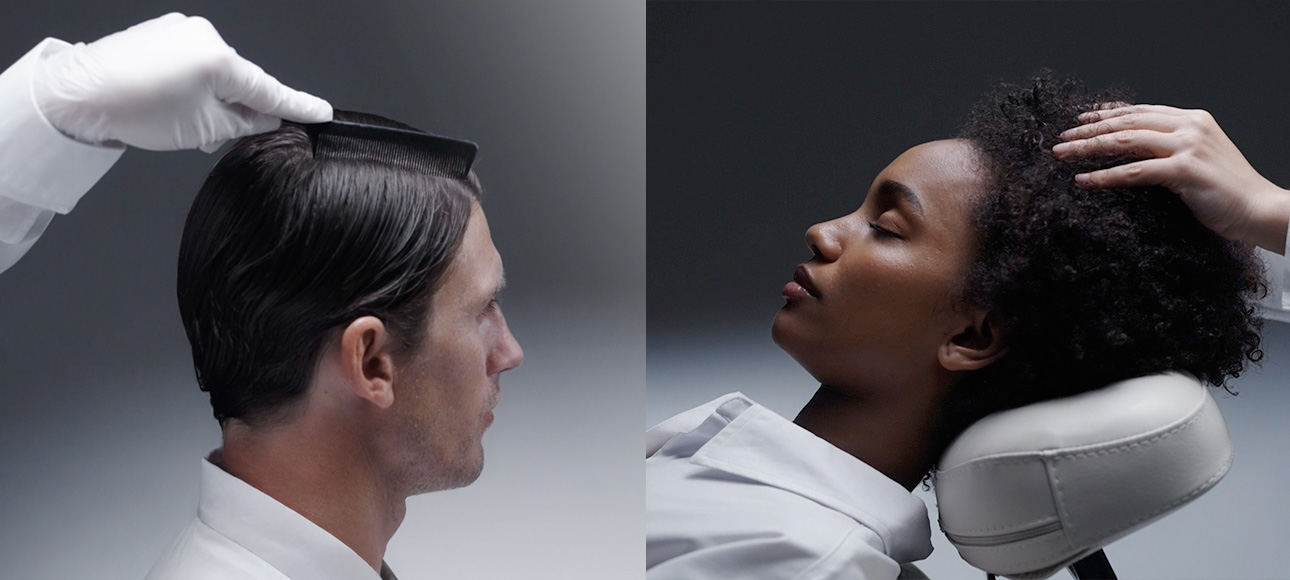
Men and women share the same basic hair biology, but hormones, genetics and lifestyle shape the key differences between the two sexes’ hair.
“The follicles are the same structures, but the signals they receive are not,” reveals Ricardo Vila Nova. “Understanding those signals is what determines whether hair stays strong, slowly thins or disappears altogether,” he adds.
Understanding the differences
All human hair grows in cycles: a long growth phase, a brief transition phase and a resting phase before shedding. The longer the growth phase, the longer and thicker the hair can become. Women naturally have a longer growth phase, which is why women can grow longer hair and often maintain higher density across the scalp.
Men, by contrast, have a higher sensitivity to the sex hormones known as androgens, particularly dihydrotestosterone (DHT). “In genetically predisposed follicles, DHT triggers miniaturisation, a process where the follicle gradually shrinks and produces finer, shorter hairs with each cycle until it produces little more than soft, barely visible strands. Women also have androgens, but oestrogen and progesterone normally buffer their effects, which is why most women maintain their hair until those protective hormones begin to fluctuate or fall,” explains Vila Nova.

Why hair loss patterns look so different
In men, hair loss follows a predictable map. It typically starts at the temples and crown, progressing in recognisable patterns as more follicles become miniaturised. This leads to receding hairlines and bald spots.
Women lose hair differently. Rather than receding, they tend to experience diffuse thinning across the parting, crown and sides of the scalp. The hairline usually remains intact, but density behind it quietly fades. “The ponytail is thinner, the parting is wider, but there are no obvious bald patches the way men get,” adds Vila Nova.
Hair fall vs hair loss
While androgenic alopecia is the most prevalent type of hair loss in women, they are far more prone to telogen effluvium. This is a type of hair fall where large numbers of hairs shed at once following stress, illness, hormonal shifts or nutritional depletion. Pregnancy, perimenopause, rapid weight loss and emotional trauma are common triggers.
Men can experience this too, but progressive genetic miniaturisation is a much more dominant driver of male hair loss.
“Women often come to us after a big shed,” Vila Nova says. “The follicles are still alive. If you support them, many will recover. Men are more likely to lose hair slowly and permanently if it is not treated.”
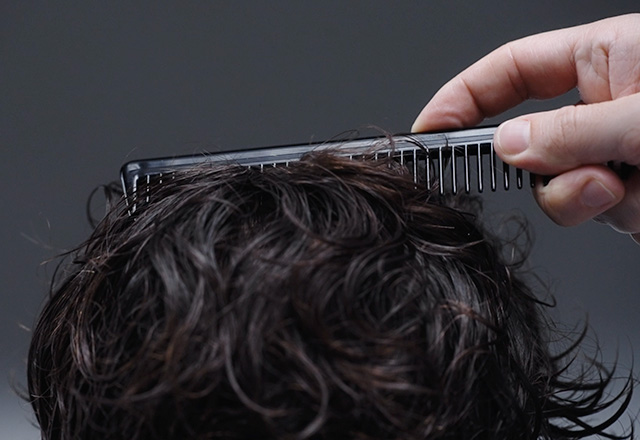
Treatment differences
Vila Nova recommends his unique Hair DNA Scan, an advanced scalp diagnostic that allows Vila Nova to identify androgen sensitivity, inflammation, circulation and follicle viability.
“For men, we often need to address DHT while stimulating circulation and cellular energy. For women, the focus is more on stabilising the growth cycle, improving scalp health and supporting follicles through hormonal change,” reveals Vila Nova.
At 212.2 Ricardo Vila Nova, treatment protocols are always personalised. When it comes to the actives used, men often receive cocktails designed to counter androgen sensitivity and stimulate growth in vulnerable zones. Women are more likely to receive regenerative actives that support fragile follicles and extend the growth phase. “The fundamentals of healthy hair remain the same – meaning scalp health is a focus for both my male and female clients,” shares Vila Nova.
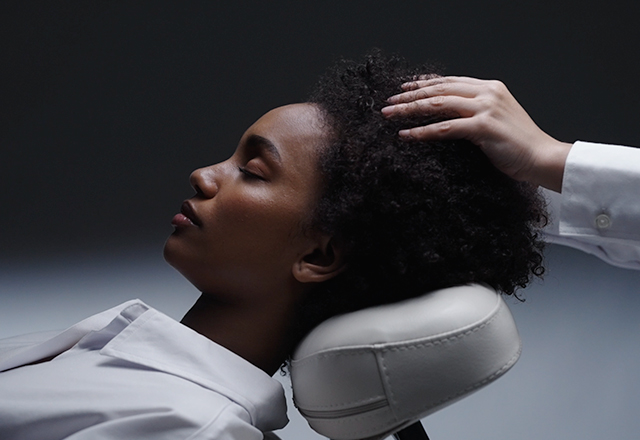
Men, women and hair transplants
Hair transplants are often associated with male pattern baldness, but they also play an important role in female hair restoration when used correctly. The difference lies not in whether women can benefit, but in the type of hair loss being treated.
“Women with traction alopecia, scarring alopecia, or long-standing mechanical damage often do extremely well with transplantation,” says Vila Nova. “In these cases, the follicle loss is localised and stable, which makes it ideal for surgical restoration.”
Where surgery is less effective is in diffuse hormonal thinning, which is common in perimenopausal and menopausal women. “In these cases, follicles across the scalp are weakened rather than absent, so regenerative treatment is needed to stabilise and strengthen them,” explains Vila Nova.
However, he notes that, “a transplant moves follicles, it does not fix their biology. If the underlying environment is still hostile to hair growth, you simply transplant fragile follicles into fragile ground.” This makes it incredibly important to start caring for the health of your hair and scalp as early as possible, well before you even notice any issues with your strands.

What men and women share
Despite the differences, the foundations of healthy hair are universal. Follicles need blood flow, oxygen, nutrients, hormonal balance and a healthy scalp environment. Protein intake, iron, omega-3s, B vitamins, sleep quality and stress management all influence how well your follicles perform and how your hair looks.
“Being male or female gives us useful information,” says Vila Nova. “But it does not tell us everything. Two men can lose hair for completely different reasons, just as two women can. What matters is how the follicles are behaving right now.”
This is why diagnostic-led treatment sits at the centre of Vila Nova’s approach. When the underlying drivers are identified and treated with precision, hair becomes more stable, more predictable and far more responsive, regardless of gender.

To explore a personalised hair health programme, book a consultation using the link below.