

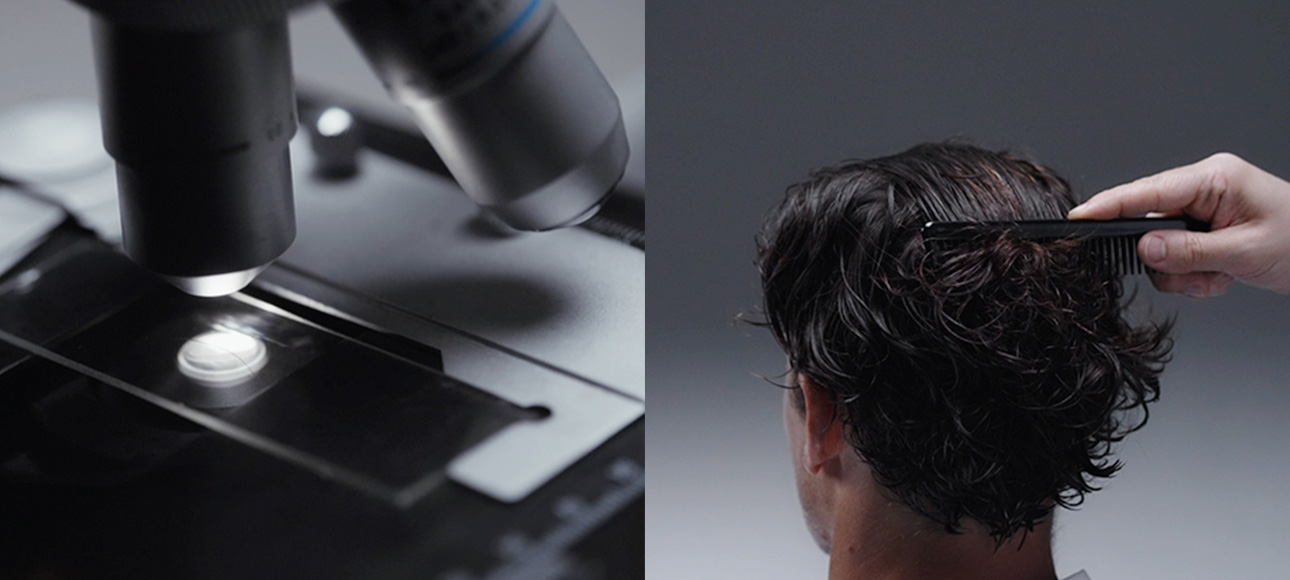
Hair loss tends to be slow and steady, and at first you may not notice much change. From a slight recession in the hairline, and a bit more shedding than usual, to strands that are a little thinner.
Over time these small changes can become majorly noticeable hair loss. “Male hair loss is something I see every single day. It’s incredibly common, but it’s also misunderstood. People often wait until the change is obvious, when the truth is – the earlier we act, the more we can do,” shares Ricardo Vila Nova.
Understanding male hair loss
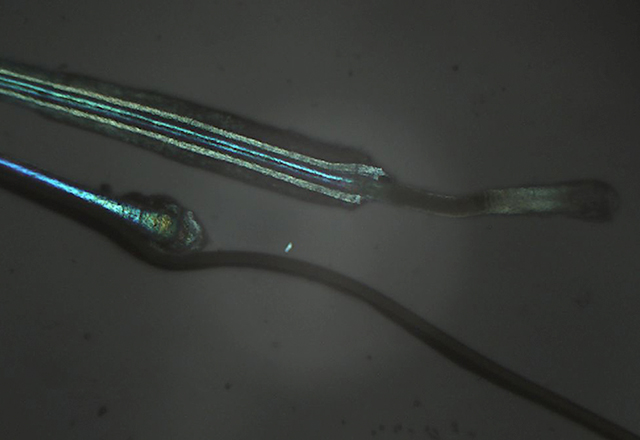
The most common form of hair loss in men is androgenic alopecia, also known as male pattern hair loss. It’s estimated to affect up to half of all men by the age of 50, though signs can start appearing as earlies as the age of around 20.
“Male pattern hair loss follows a distinct pattern. It usually begins with recession at the temples or thinning on the crown. Gradually the hair loss expands until they meet, leaving a horseshoe-shaped band of hair around the back and sides of the scalp,” explains Vila Nova.
At its root, the process is influenced by hormones, particularly dihydrotestosterone (DHT), a derivative of testosterone that binds to receptors in the hair follicles and gradually shortens their growth cycle. “As the cycle shortens, the follicles shrink and the hair they produce becomes progressively finer and shorter until it stops growing altogether,” adds Vila Nova.
Written in your DNA
In most cases, male pattern hair loss isn’t random, it’s inherited. “Our genetics are like the script your hair follicles follow,” explains Vila Nova. “If there’s a family history of hair loss, there’s usually a pattern – not only in who it affects, but in how it presents. You might inherit the sensitivity from one parent, the density from another, and the speed of progression from both. It’s that unique mix that determines your individual outcome.”
Still, genes don’t tell the whole story. “What we inherit is the potential for hair loss, not its inevitability. Stress, illness, poor nutrition and lack of sleep can all act as catalysts that switch those genetic signals on more aggressively. Plus, the environment you live in, from air quality to how you care for your scalp, can either slow the process or accelerate it,” reveals Vila Nova.
At 212.2 Ricardo Vila Nova, we start with the Hair DNA Scan. Vila Nova is able to map out your genetic markers, to predict how hair will likely age if no intervention takes place. “When you understand what’s coming, you can get ahead of it and be proactive rather than reactive,” explains Vila Nova. Following your Hair DNA Scan a personalised protocol is devised and treatments are layered to target different points in the hair loss process, from follicle regeneration to scalp environment and cellular repair.

Biosomes
While exosomes have dominated conversations around scalp regeneration, biosomes represent the next step forward. These microscopic lipid vesicles act as advanced delivery systems, carrying a potent mix of growth factors, peptides, vitamins, and antioxidants directly to the follicle bulb. Their structure mimics the body’s own cell membranes, allowing them to merge seamlessly with the scalp at a cellular level.
“Biosomes are incredibly sophisticated,” explains Vila Nova. “They can transport regenerative actives exactly where they’re needed, helping to extend the follicle’s active growth phase and strengthen new hair as it emerges. They also calm inflammation and repair the scalp’s barrier, which is essential for long-term results.”
At our clinics, biosomes are paired with microneedling to boost absorption and accelerate regeneration. A single session can help reset the scalp environment, but results build gradually over several months. “Most clients benefit from a treatment every six months, with supportive scalp care in between,” says Vila Nova. “It’s not about chasing instant results, but building a healthier foundation for sustainable growth.”
PRP
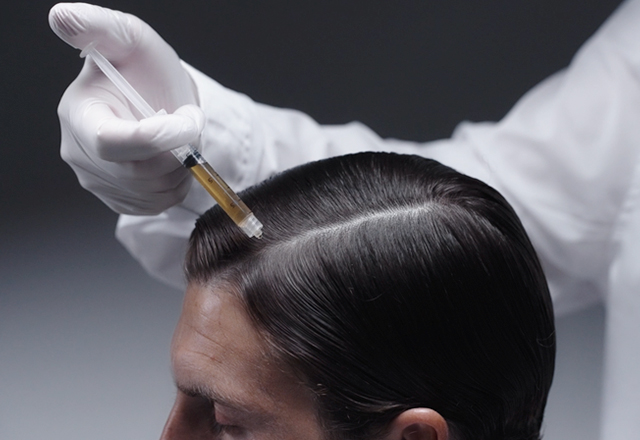
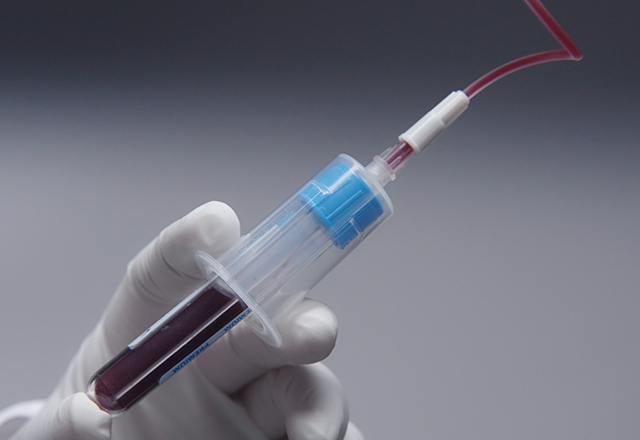
Platelet-rich plasma (PRP) is one of the most established regenerative treatments used in trichology. It harnesses the body’s own healing potential by isolating growth factor–rich plasma from the blood and re-injecting it into targeted areas of the scalp. These proteins stimulate stem cells in the follicle’s bulge region, improving vascularisation and encouraging new hair to grow.
“Because PRP comes from your own blood, there’s virtually no risk of an allergic reaction,” notes Vila Nova. “But its effectiveness depends on the quality of your blood. If you’re run down, nutrient-deficient or stressed, results can be limited. That’s why we always look at the person as a whole, not just the scalp,” he adds.
A course of three to four sessions spaced four to six weeks apart is typical, with maintenance every few months. Improvements are often visible after the second session as the follicles become more active and hair texture thickens.
LED light therapy
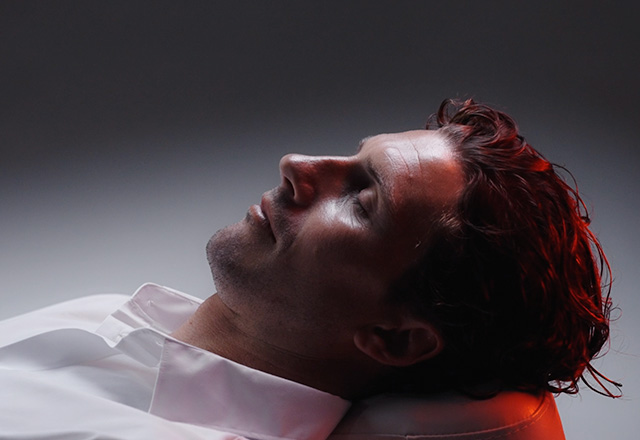
Low-level light therapy (LLLT) is another cornerstone of Vila Nova’s hair restoration protocols. Using precise wavelengths of red and near-infrared light, LED therapy energises cells within the follicle and improves microcirculation. “The result is increased ATP production, the main energy-carrying molecule used by all our cells, that drives repair and growth,” says Vila Nova.
It’s essentially like giving the follicle more fuel. “The light helps it perform better, stay active for longer, and hold onto hair more effectively,” adds Vila Nova. Used regularly, LED can enhance the effects of in-clinic treatments, keeping the scalp in an optimal growth state.
Scalp care
When it comes to hair loss don’t sleep on general scalp health. Vila Nova combines in-clinic detoxifying and microbiome-balancing protocols with personalised at-home care by way of the Active Fusions haircare range. Each blend is personalised to address your individual scalp concerns, from inflammation to oil imbalance and everything in-between.
“Think of it as maintaining the ecosystem that supports your hair. A healthy scalp means stronger follicles, better blood flow, and less inflammation. All the elements you need to sustain growth,” says Vila Nova.
Together, these treatments form a multi-layered approach that tackles hair loss from every angle: stimulating follicles, repairing the scalp environment, and reinforcing the body’s own regenerative potential.
Prevention before restoration
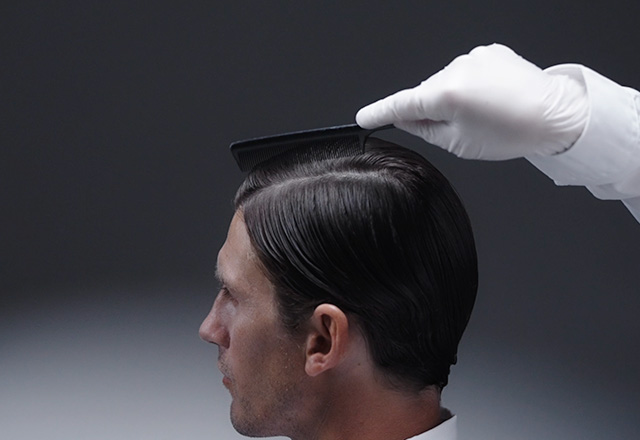
Hair transplants can be tempting when you notice signs of hair loss, but they’re not a fix-all. “The healthiest, most natural results come from working with what you already have. Once a follicle is gone, it’s gone. But most men still have time on their side when they first start to notice a change. If we protect those follicles early, we keep more of them. This often means surgery can be delayed or avoided entirely,” shares Vila Nova.
So, when it comes to male hair loss, you don’t have to panic, but you do have to act. The earlier you start, the stronger your hair will stay.

For personalised advice on how to prevent and treat your hair loss, book a consultation using the link below.