
There’s a growing shift in how we care for our hair. Instead of chasing volume or shine alone, the focus has turned to treatments that encourage healthier growth and long-term strength.
Red light therapy has quietly been part of this movement for a while. Loved for its skin benefits, it’s a treatment many have heard of but are only now beginning to truly embrace for hair.
“As the popularity of light therapy face masks has grown, so has the interest in what the likes of red light can do for the hair,” says Ricardo Vila Nova. “On its own, it’s not a magic fix. But when you use it in the right way, at the right time, it can transform how well your hair follicles respond to everything else you’re doing,” he adds.
How light therapy works
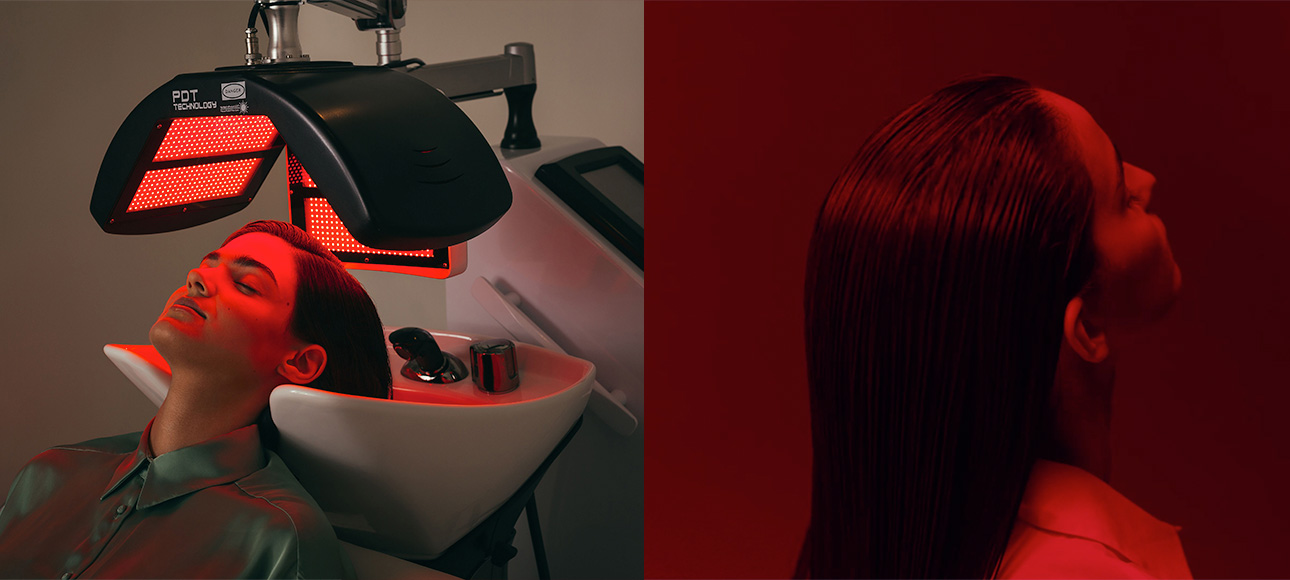
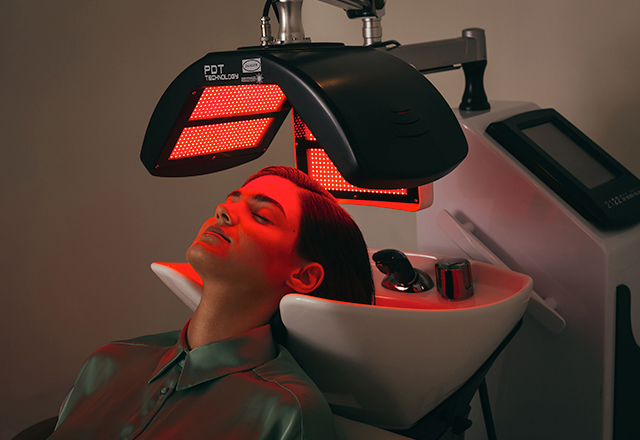
Red light therapy, or low-level laser therapy (LLLT), as it’s known clinically, relies on specific wavelengths of red and near-infrared light to nudge follicles back into a more active state. “The wavelengths usually sit somewhere between 630 and 680 nm for red light, and 800 to 880 nm for near-infrared,” shares Vila Nova.
Not to be confused with laser light used for skin resurfacing or hair removal, red light therapy isn’t heat-based. It’s low energy and non-thermal, which means it doesn’t create damage to induce healing or to kill the hair follicle. Instead, the wavelengths used for hair regeneration travel just deep enough to hit the mitochondria, aka the power stations inside cells.
“When mitochondria absorb light at these wavelengths, they make more ATP, that’s the energy every cell relies on. And once the follicle has more energy, everything improves: the way it grows, how long it stays in the growth phase, and how well it holds on to the hair,” explains Vila Nova.
Not only do your follicles respond to that energy surge by ramping up their activity. Blood flow improves increasing oxygen delivery to the base of each hair follicle. This is why it’s such a good partner for other regenerative treatments as better blood flow means better delivery of actives.
Red light therapy also lowers inflammation. “Chronic inflammation around the follicle – often linked to stress, hormones or environmental factors – can cause it to ‘shut down’. This makes red light therapy incredibly beneficial for people experiencing diffuse thinning, stress-related shedding, or early-stage androgenic alopecia, when follicles are vulnerable but not yet beyond help,” explains Vila Nova.
Red light for hair loss
At varying times, every hair on your head moves through a growth cycle: anagen (growth), catagen (transition), and telogen (rest). In people with genetic hair loss aka androgenic alopecia, or accelerating factors like stress – the growth phase shortens. Hairs get thinner, weaker, and shed more easily.
“Red light therapy is about giving follicles a longer, stronger run in that growth phase. It encourages better anchoring, healthier fibres, and more resilience overall,” says Vila Nova.
As effective as it can be, red light therapy isn’t a standalone treatment solution. It can’t resurrect ‘dead’ follicles, but it can help keep at-risk follicles active for longer, and that makes a significant difference when used early. “Think of red light therapy like turning up the volume on everything else you’re doing. It amplifies the results of regenerative treatments, medical therapies, and scalp care, which is why we use it as part of your on-going treatment strategy, but never as a one-off or a standalone treatment,” says Vila Nova.
That means red light treatments should always be layered with other therapies, think biosomes to stimulate follicles directly, PRP to feed them with growth factors, scalp detox protocols to clear the way, and lifestyle interventions to support everything from the inside out. “The follicle doesn’t live in isolation; it’s part of a system. Red light strengthens that system,” adds Vila Nova.
In-clinic vs. at-home
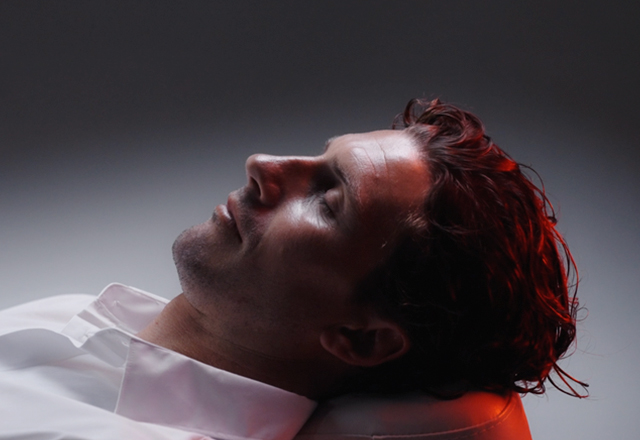
Red light therapy exists in two worlds: in-clinic and at-home. “The device we created delivers controlled energy and has enough power to penetrate deep into the follicle bulb. It targets the scalp evenly and reaches the zone where regeneration actually occurs. That’s why in-clinic versions tend to deliver faster, more reliable results,” says Vila Nova.
At-home devices like helmets, combs and headbands, have their place too. “They’re brilliant for keeping things ticking over between appointments. But they rely heavily on consistency – something people often find hard to implement,” explains Vila Nova.
Who benefits the most
The ideal candidates for red light therapy aren’t those looking for a miracle after years of hair loss, but those who want to encourage long-term healthy hair growth, or who are just beginning to notice an elevation in hair shedding, and thinning due to their genetics. It’s also a solid support for postpartum shedding, stress-induced loss, and transplant recovery.
“It’s never too late to support your follicles. But the earlier you start, the more you’ll keep, and the stronger those hairs will be,” says Vila Nova.
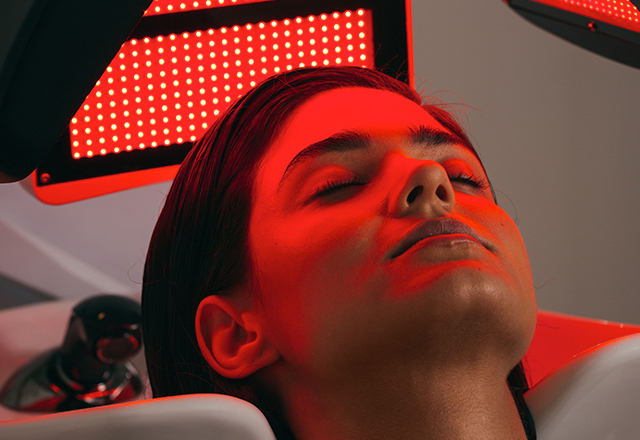
To discover what treatments will help you achieve your hair health goals book a consultation by clicking the link below.