

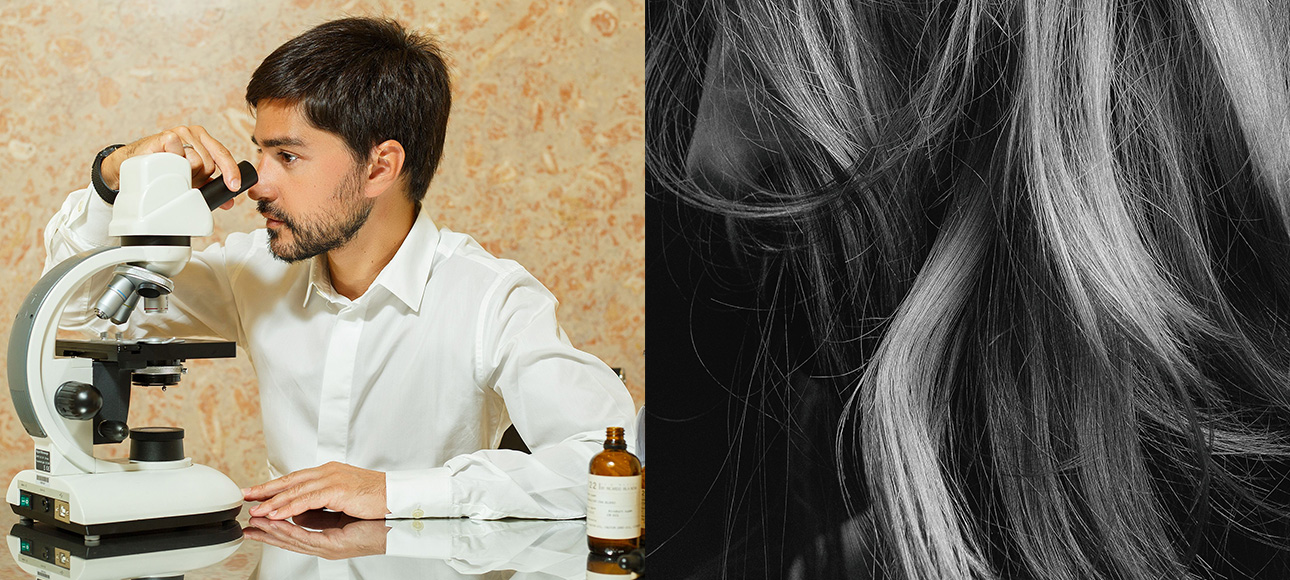
Grey hair has long been thought of as an inevitable part of ageing that not much can be done about other than embrace it or hide it with hair dye.
But a growing body of research published in the last two years is beginning to challenge that assumption. Namely that the process driving grey hair may not be a permanent one, and that the science of hair repigmentation is advancing faster than most people realise.
“Grey hair is one of the most visible signs of biological ageing, but it is not simply a cosmetic issue. It reflects what is happening at a cellular level within the follicle, and that is precisely where intervention becomes possible,” says Ricardo Vila Nova, trichologist and founder of 212.2 Ricardo Vila Nova.

Why hair goes grey
The pigment-producing cells that live within the hair follicle transfer melanin into each new hair shaft as it grows – this is how our hair gets its colour. The pigment-producing cells known as melanocytes are replenished by melanocyte stem cells (McSCs) that sit in a protected zone of the follicle called the bulge. The process works reliably for decades: as a new hair growth cycle begins, McSCs receive chemical signals that tell them to migrate, mature into melanocytes and produce pigment.
Greying happens when this system breaks down. Oxidative stress, accumulated over time through UV exposure, pollution, chronic stress and the body’s own metabolic processes, damages both melanocytes and the McSCs that produce them. Hydrogen peroxide (a reactive oxygen species that builds up in the follicle with age) bleaches the hair shaft from within and impairs melanocyte function. “The follicle doesn’t lose the ability to produce hair; it simply loses the ability to colour it. But emerging studies suggest that, under the right conditions, that ability can be restored,” reveals Vila Nova.

New research
In 2023, researchers at NYU Langone Health published a landmark study in the journal Nature, revealing that melanocyte stem cells don’t simply die as hair goes grey, instead they get stuck. Under normal conditions, McSCs move back and forth between compartments of the developing hair follicle, receiving signals that tell them when to mature and produce pigment. When they stop moving and become fixed in one location, they lose the ability to receive those signals and pigment production ceases. Crucially, the cells are still there, they’re simply immobile.
In 2025, research from Nagoya University in Japan showed that luteolin, a naturally occurring antioxidant found in vegetables including celery, broccoli, carrots, onions and peppers, completely reversed greying in mice by protecting melanocyte stem cells from oxidative damage. A separate 2021 clinical study demonstrated that targeting oxidative stress and protecting melanocyte reservoirs produced measurable repigmentation in human subjects after just four months. “The science is clear: greying is a process driven by cellular dysfunction, and cellular dysfunction can be addressed. So, the idea that grey hair is simply the inevitable result of ageing is being replaced by a more nuanced understanding that these cells can, under the right conditions, be reactivated,” says Vila Nova.
The role of cellular regeneration
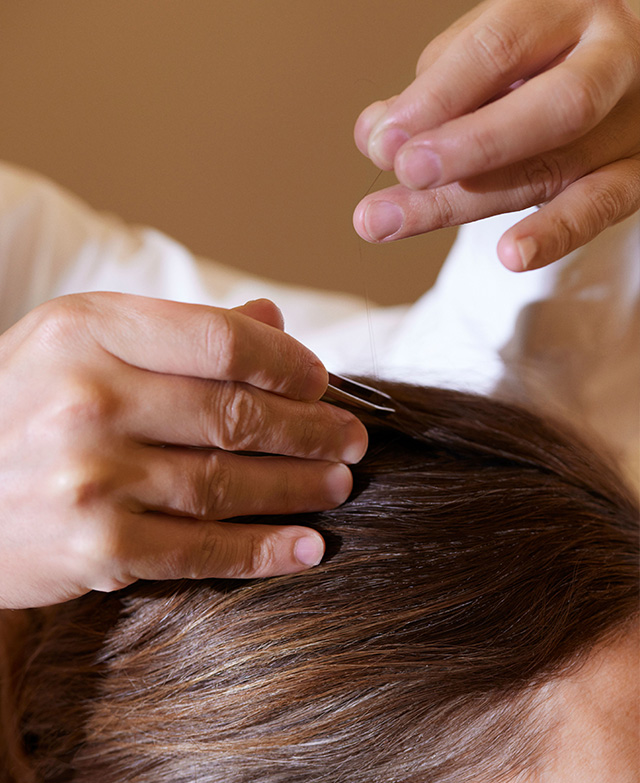
The treatments that show the most promise in supporting hair repigmentation are those that address the underlying cellular environment rather than the colour itself. “Reducing oxidative stress, improving follicular circulation, supporting stem cell activity and calming inflammation are all mechanisms that create conditions in which melanocyte stem cells can function more effectively,” reveals Vila Nova. This is the same biological terrain that Vila Nova’s treatment protocols are already working in. “Our approach has always been to treat the scalp as a living environment that requires active management. When we reduce inflammatory load, improve vascular supply and support cellular communication within the follicle, we are creating the conditions in which the pigment system (if it still has functional stem cells) has the best possible chance of remaining active or even recovering some function,” says Vila Nova.
Treatments at 212.2 Ricardo Vila Nova
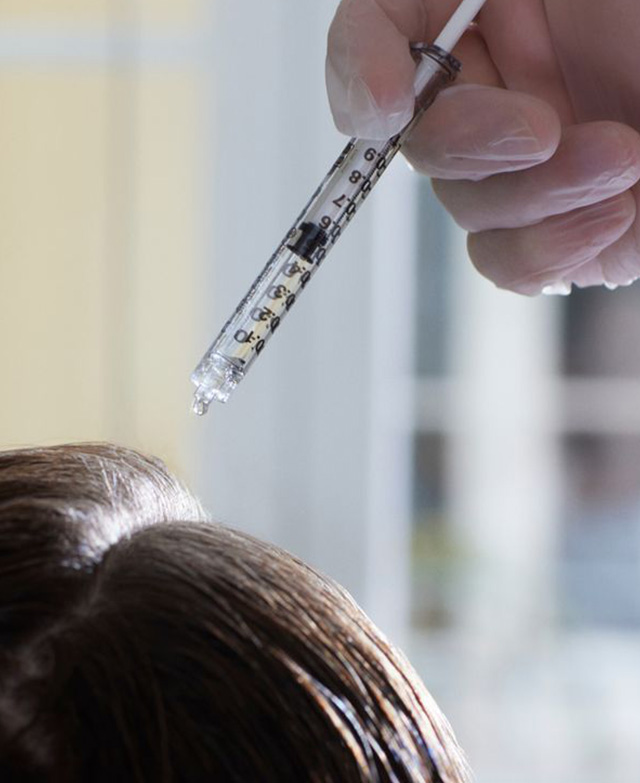
All of the in-clinic treatments offered at 212.2 Ricardo Vila Nova indirectly address the cellular mechanisms involved in greying. “We have observed in clinic that clients who undergo consistent regenerative scalp treatment sometimes report slowing of the greying process, and in some cases, the return of pigment to previously grey strands. This is consistent with what the research is beginning to show: that when you restore a healthier cellular environment, the pigment system can respond. It is not guaranteed, it is not universal, and it depends heavily on whether functional melanocyte stem cells are still present in the follicle. But the possibility is real, and it is increasingly supported by science,” says Vila Nova.

What this means for you
The most important variable in whether repigmentation is achievable is the state of the melanocyte stem cell population. If those cells are still present but dormant or stuck (as the NYU research suggests is often the case), restoring the follicular environment gives them the best chance of reactivating. If they have been permanently depleted, repigmentation through regenerative treatment alone is unlikely. This is why early intervention matters: the earlier oxidative damage is addressed and the follicular environment is supported, the greater the probability that functional McSCs remain.
Grey hair doesn’t have to be forever, nor does one grey hair mean you’ll get many more. For lots of people, it is a signal that the follicle environment needs support, and support is something we can provide. The science is moving quickly, and our understanding of what is possible is changing. What I can say with confidence is that doing nothing accelerates the process. Intervening early, consistently and intelligently gives the best possible outcome,” concludes Vila Nova.
To explore a personalised approach to scalp health and hair repigmentation, book a consultation at 212.2 Ricardo Vila Nova.

