
Hair loss tends to dominate the conversation around menopause and hair.
But hair that suddenly feels rougher, snaps mid-length or grows thinner than it used to are just as common, and for a lot of women, considerably more confusing to deal with. Understanding why your hair has changed, “requires looking at what menopause is doing to the hair at a structural level,” says Ricardo Vila Nova.
What menopause does to your hair
Perimenopause (the transitional phase before menopause itself) is characterised by fluctuating oestrogen and progesterone. Both hormones play a direct role in maintaining hair growth, hydration and overall fibre quality. As oestrogen levels begin their decline, several things happen at once: sebum production drops, the scalp loses some of its natural lubrication, and changes in circulation and cellular turnover start to affect how the hair fibre forms.
“As sebum production changes, the scalp and hair can become drier, even in individuals who previously had oily roots,” Vila Nova explains. This means women who have never had dry hair find themselves navigating a completely different set of needs, and needing a whole new arsenal of haircare products too.
“Not only that, changes in hydration and pH levels can affect the hair shaft’s structure, leading to brittleness, and in some cases, reduced growth or density,” shares Vila Nova.
A ponytail that’s noticeably thinner isn’t automatically a sign of hair loss in the clinical sense. Often it reflects something more layered: finer individual strands, more breakage along the shaft, and a general reduction in volume that comes from structural changes rather than follicle loss.
“When the hair fibre becomes weaker, it doesn’t retain its length as effectively,” Vila Nova explains. “You may still be producing hair, but if it’s breaking more easily or growing with a reduced diameter, the overall density will appear lower.”
Menopause also influences the cellular processes within the follicle that occurs when creating a hair strand. Nutrient delivery, protein synthesis, and keratin production all slow during menopause, and iron, zinc and B vitamins, which the follicle depends on to construct strong fibres, are among the first to become depleted.
Finally, “menopause alters how the body processes and distributes energy, fat, insulin and nutrients at a whole-body level. When insulin sensitivity changes, fat distribution shifts, and the body’s ability to absorb and utilise key nutrients is affected, the follicle bears the brunt. This results in strands that feel and behave differently to how they did in your youth, even when growth itself continues,” shares Vila Nova.
When to seek expert advice
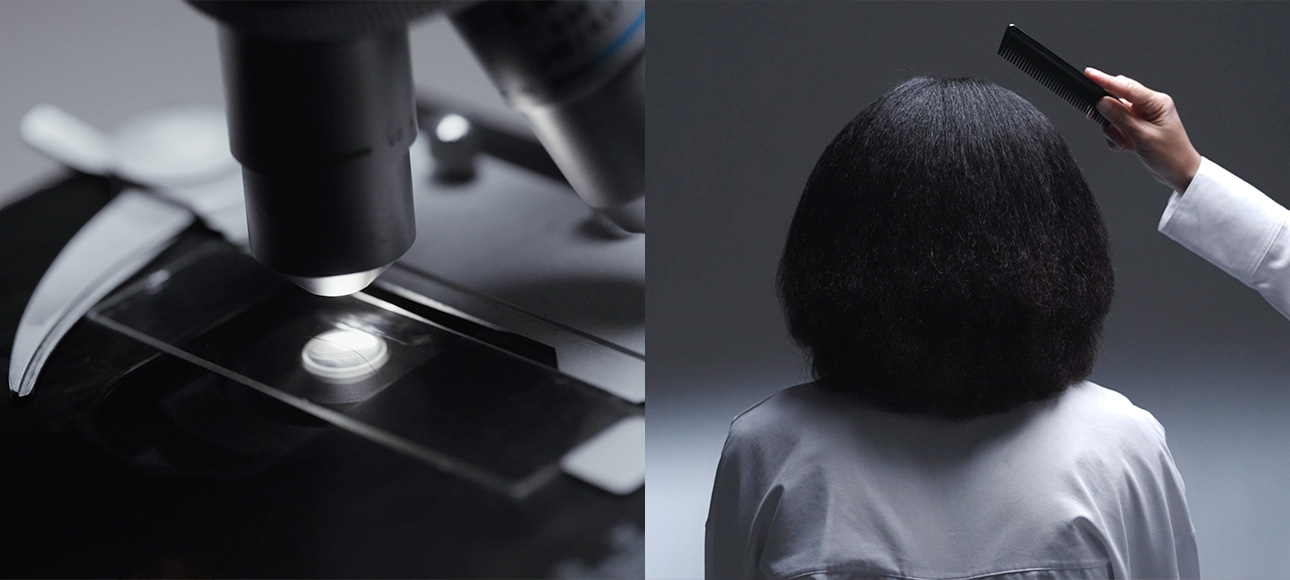
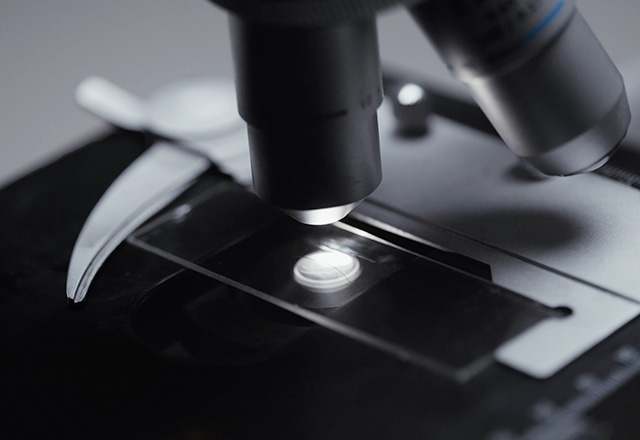
If the changes feel significant or sudden, it may be time to seek guidance from a trichologist,” says Vila Nova. A trichologist can carry out a thorough scalp and hair analysis, often including blood work or advanced diagnostics such as a Hair DNA Scan available at 212.2 Ricardo Vila Nova. This scan identifies whether hormonal shifts, nutritional deficiencies, thyroid function or other underlying factors are driving the changes your hair is presenting with. The earlier that assessment takes place, the more options there are to work with.
Rethinking your routine
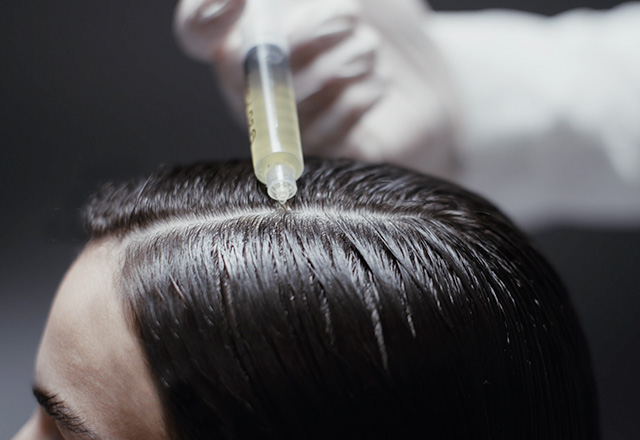
When it comes to options, reassessing your haircare is one of the most important, and most overlooked responses to menopausal texture changes. The haircare you loved and used religiously pre perimenopause catered to your scalp condition of old. “The first and most important step is to re-evaluate the products you are using, as they may no longer be suitable for your hair’s current needs,” advises Vila Nova.
In practice, this means shifting away from formulas built around oil control or lightweight volume, think shampoos with clarifying sulphates, thin conditioners, and dry texture sprays — and moving toward products that actively rebuild moisture and reinforce the hair’s protein structure. Look for the actives used in our Active Fusions like hyaluronic acid and glycerine that functions as humectants, drawing moisture into the shaft and helping it stay there. As well as hydrolysed keratin, silk amino acids and peptides, which work by filling gaps in the cuticle and strengthening the cortex from within.
How you treat your hair matters too as daily mechanical stress from brushing, heat styling, friction from pillowcases and hair ties, and the tension created by pulling the hair, causes cumulative damage. A leave-in conditioner or protective serum applied before heat or styling creates a physical barrier that reduces that friction and slows the rate of cuticle degradation. Ingredients like argan oil, squalane and ceramides are particularly effective here, as they coat the fibre without weighing it down, maintaining flexibility while defending against everyday wear.
In-clinic treatments
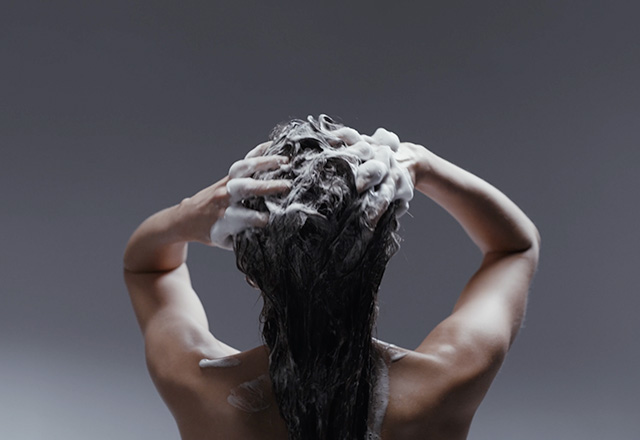
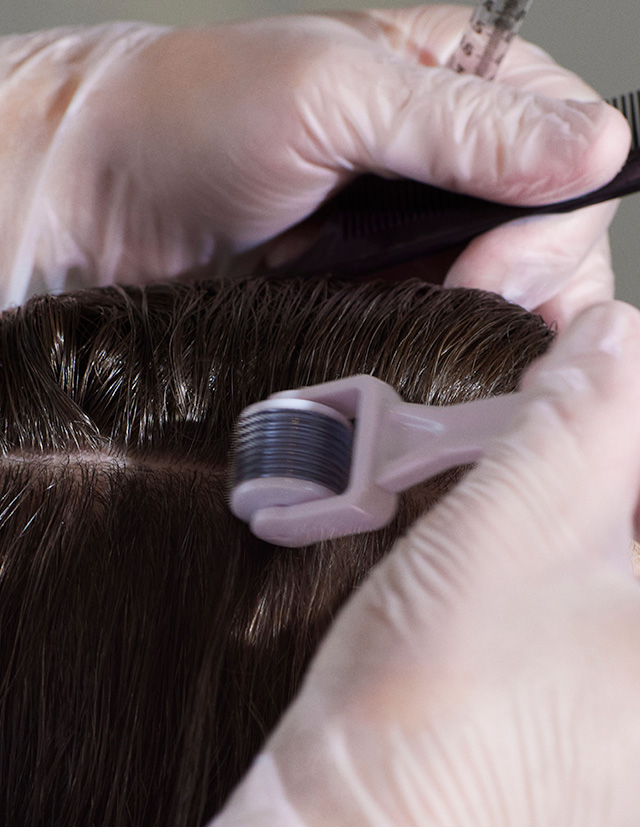
For more pronounced change, think hair that feels significantly weaker and thinner, texture that your at-home haircare can’t seem to improve, or growth that appears to have slowed -in-clinic treatments offer a more targeted level of support. “When it comes to perimenopause and menopause hair the introduction of growth-inducing treatments such as microneedling or biosomes may be beneficial,” says Vila Nova.
Scalp microneedling is a clinical procedure in which a device fitted with fine needles creates controlled micro-channels across the scalp surface. This stimulates the body’s wound-healing response, increasing blood flow and triggering the release of growth factors that support follicle activity. The micro-channels also dramatically improve the absorption of topical actives applied during or immediately after treatment.
Vila Nova is a big fan of biosomes as a topical treatment especially when it comes to menopause hair. Biosomes are advanced lipid-based delivery systems that encapsulate bioactive ingredients like peptides, vitamins, growth factors and regenerative signalling molecules. The encapsulation protects the actives from degrading in potency and ensures they reach the follicle intact, where they can support cellular repair, improve the scalp environment and promote stronger hair formation. “Neither treatment is an overnight solution, but for hair that has become progressively less responsive to topical care alone, the combination can make a meaningful difference,” shares Vila Nova.
Supporting your hair through menopause
Yes, menopause changes the hair, so what worked in your thirties won’t cut it now. That doesn’t mean you have to live with the impact hormonal changes can have on your tresses. You simply need to shift your approach.
“With the right hydration, structural support and, targeted clinical treatment, your hair can revert back to being strong, manageable and healthy,” believes Vila Nova.
To discover the best treatment plan and haircare routine for your menopause hair, book a consultation using the link below.